Whodunnit: The Case of the Winter Bee Murders
Explaining overwintering success and failure
A talk to East Devon Beekeepers by Dylan Gussman
1st October 2026 at Kilmington Village Hall.
Dylan is a member of Hampshire Beekeepers’ Association, takes part in a number of beekeeper training programmes and gives talks to other Associations.
Today’s talk has four sections:
- The Victim, understanding how a colony overwinters.
- The Suspects, what could cause a colony to fail at this time of year.
- Trends in colony losses through time, and what is leading to losses.
- Preventing further deaths, tips for overwintering better, and becoming a better beekeeper.
The Victim
Consider a wild colony in, say, a hollow tree. In summer the colony will have a brood nest towards the bottom of the cavity with pollen stores above the brood, and honey stores above the pollen. In autumn and winter, the brood nest will reduce in size with pollen and honey packed around it. This store of pollen is absolutely essential for the development of the winter bees. Their high protein pollen diet causes the winter bees to lay down larger fat bodies within their tissues which makes them capable of surviving the winter months. Glycogen, a form of carbohydrate, is also laid down and can be easily converted to energy when required.
How do bees overwinter?
When brood is being reared, the centre of the cluster will be hot (core temperature 35°C). The outer layer of the cluster consists of a tightly packed mantle of bees creating a heat shield. Between the core and mantle there will be a more loosely packed distribution of ‘heat generator bees’ plus ‘fanning bees’ who disperse the heat and control ventilation of the cluster.
Food consumption in the cluster is at a minimum when conditions are cool but not cold. As conditions get colder, more energy is consumed to maintain the core temperature, and counter intuitively, energy consumption INCREASES as temperatures rise, largely due to disturbance of the nest.
The Suspects
On entering the crime scene:
- Treat the situation as if the hive has died from something contagious. Wear appropriate PPE.
- Get all your kit ready prior to opening the hive. You may need magnifying glass, tweezers, sample bottles.
- Have your phone/camera ready to record evidence.
- Know who to call if you feel out of your depth.
Clues
Firstly, examine your hive records. Are there any clues as to why things have gone wrong. Were there adequate stores? Were there any signs of disease or infestation? What was the age of the queen?
Look for external signs of possible problems. Woodpecker activity will be easy to spot and can be fatal for a colony. Streaks of bee faeces at the hive entrance may indicate a problem with diarrhoea caused by Nosema (Vairimorpha) infection.
Are there piles of dead bees outside the hive? These could be caused by a poisoning incident, deceased bees being ejected from the hive or something else causing high mortality. Viral infections such as chronic bee paralysis virus can cause piles of dead bees.
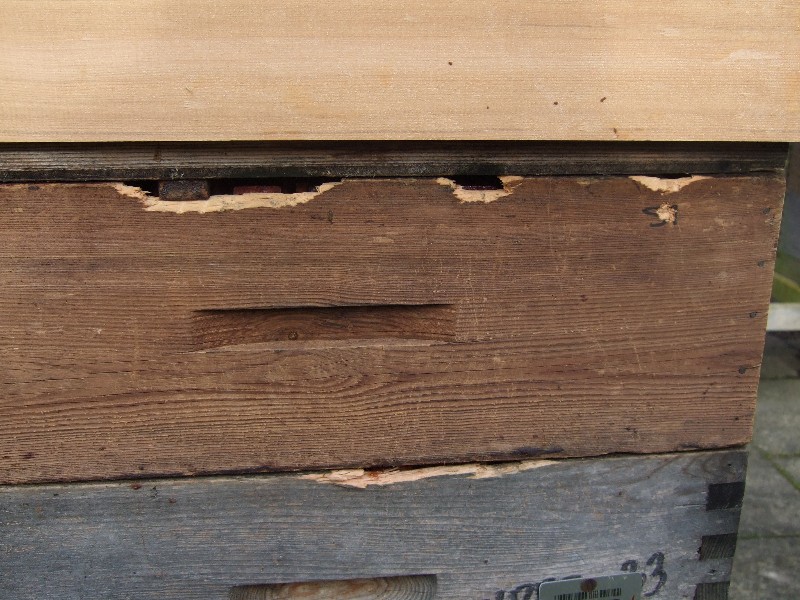
Woodpecker damage
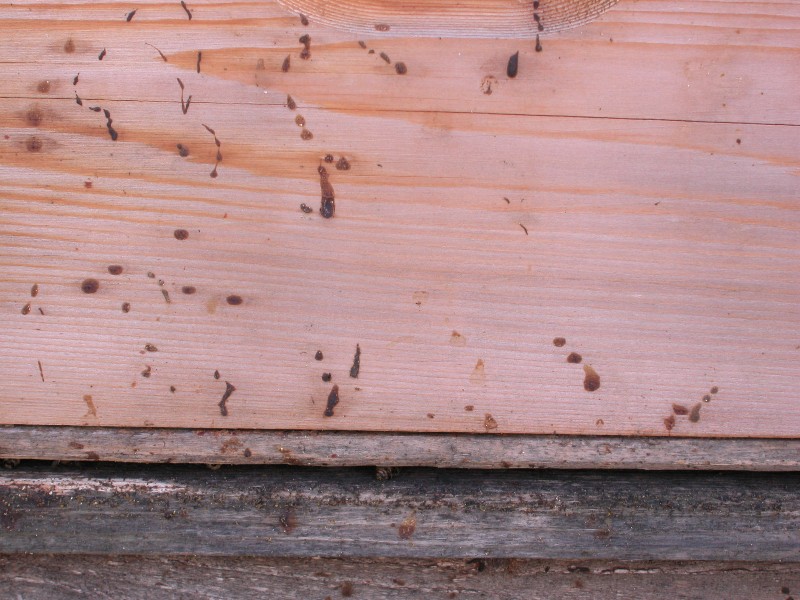
Dysentery
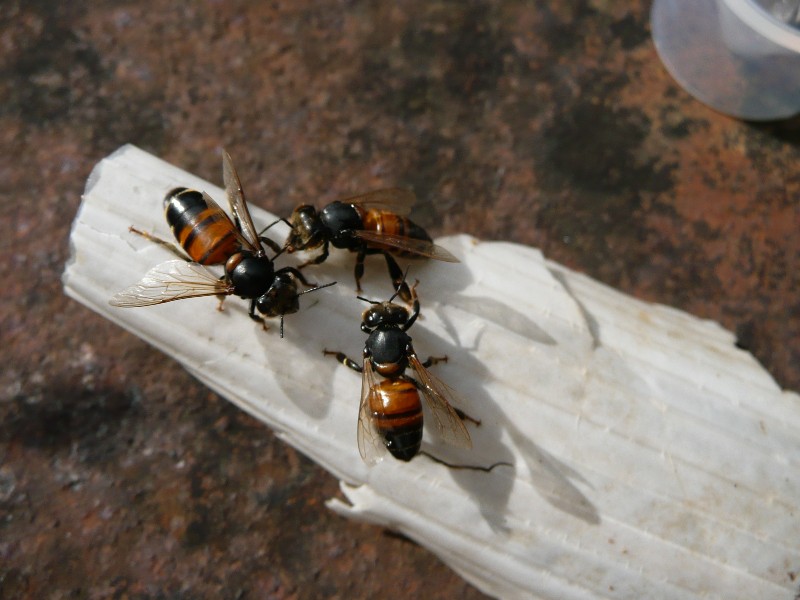
Chronic bee paralysis virus
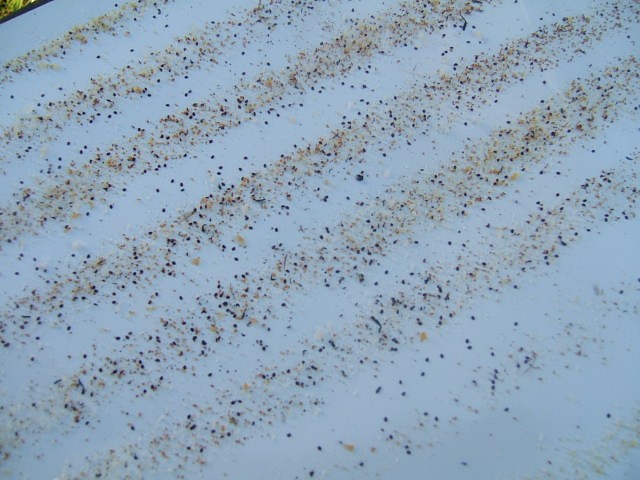
VMF tray debris
All images © Crown copyright
Inspect your monitoring board. The debris will show where the cluster was, whether brood was being reared, if honey stores had crystallised, the presence of varroa and possibly the aftermath of wasp or hornet predation (bee body parts).
Open the hive and carefully separate the frames. Note the position and size of the cluster.
Carefully inspect any brood for clues such as chalk brood mummies, sac brood remains, mouse damage or, rarely, signs of EFB/AFB.
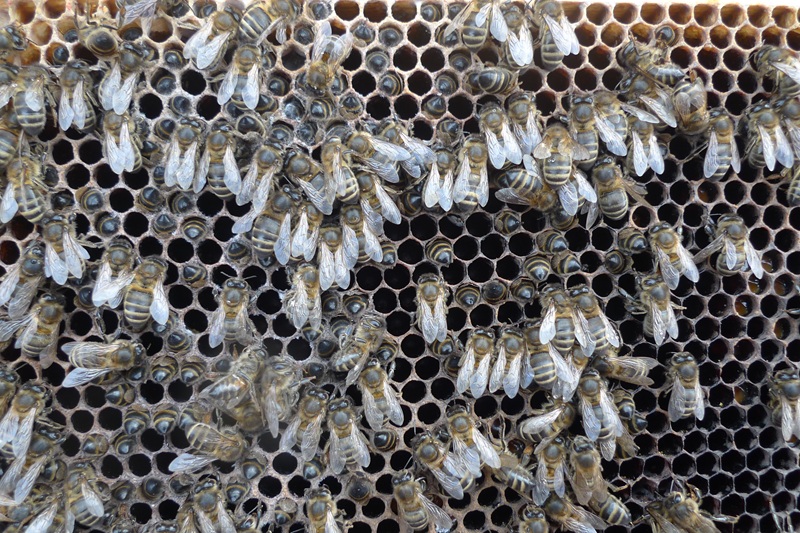
Colony starvation
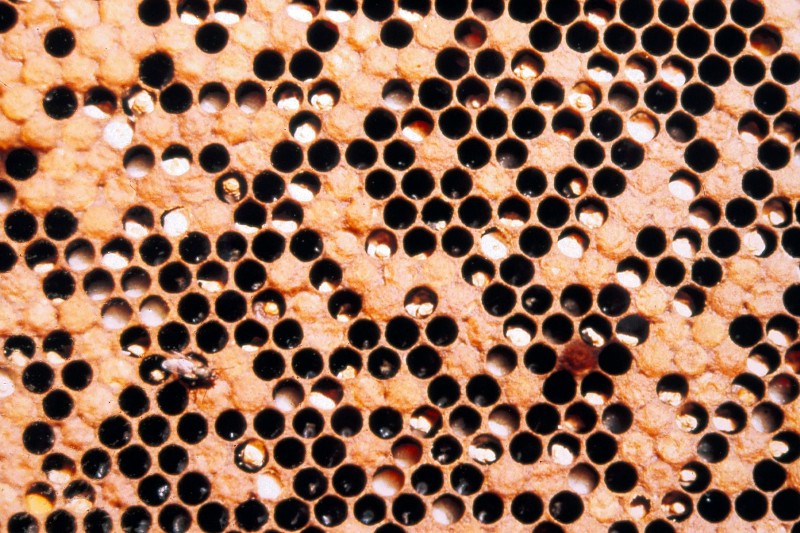
Chalk brood
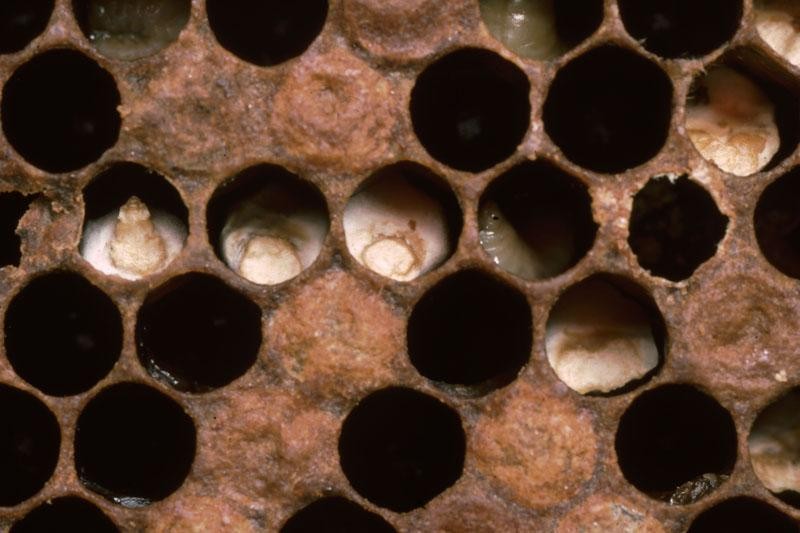
Chalk brood closeup
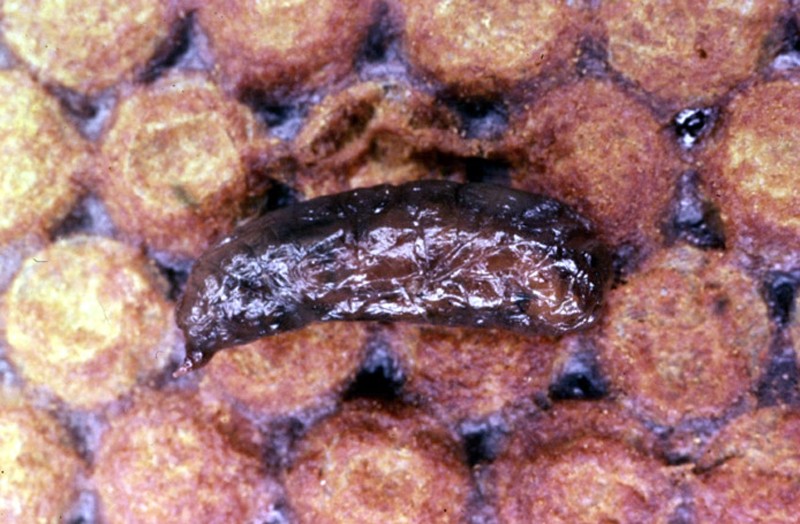
Sac brood
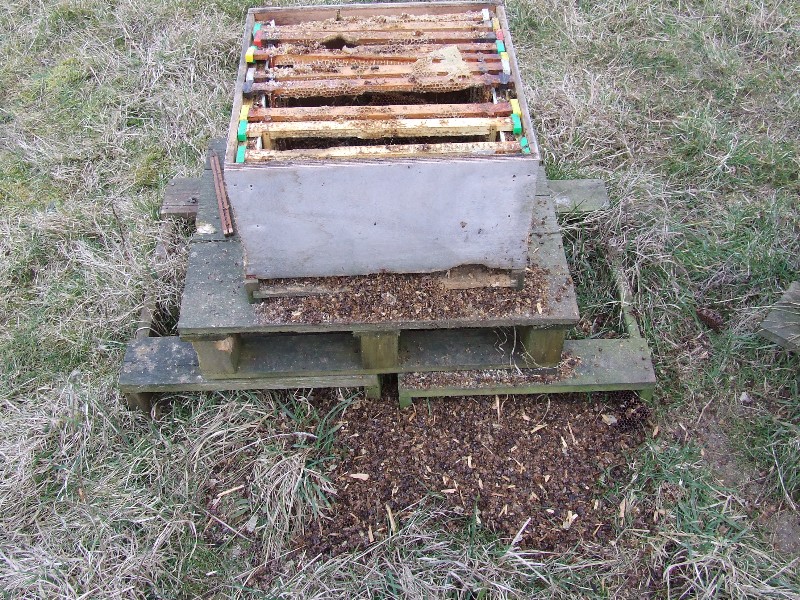
Rodent damage
Are there any signs of queen problems? Drone laying queens or drone laying workers could be responsible for colony decline.
Are there piles of dead bees inside the hive? Varroosis is a common cause and will be accompanied by bees with deformed wing virus (see image).
A microscopical analysis may reveal clues. Nosema spores and tracheal mites are two possible culprits.
International Suspects. It is possible you may be hosting one of the current alien threats to our bees, namely Tropilaelaps mite, small hive beetle or yellow legged Asian hornet.
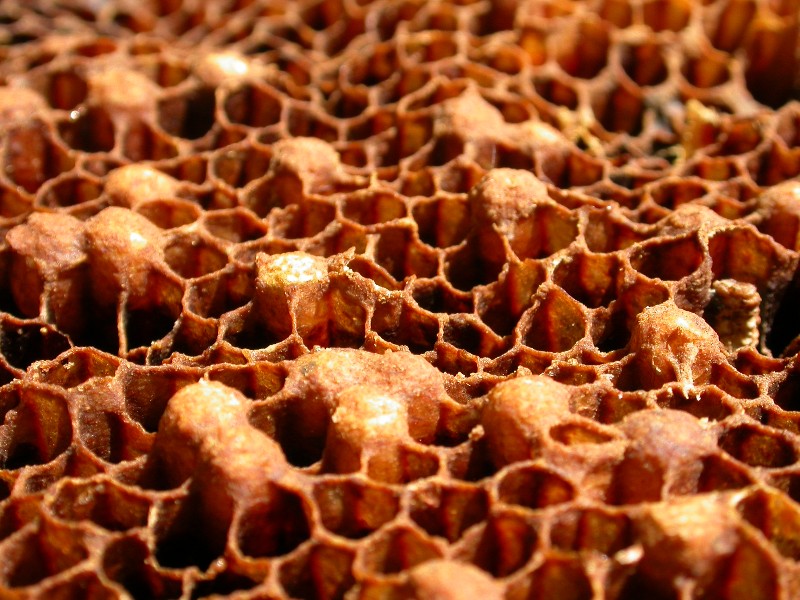
Queen problem
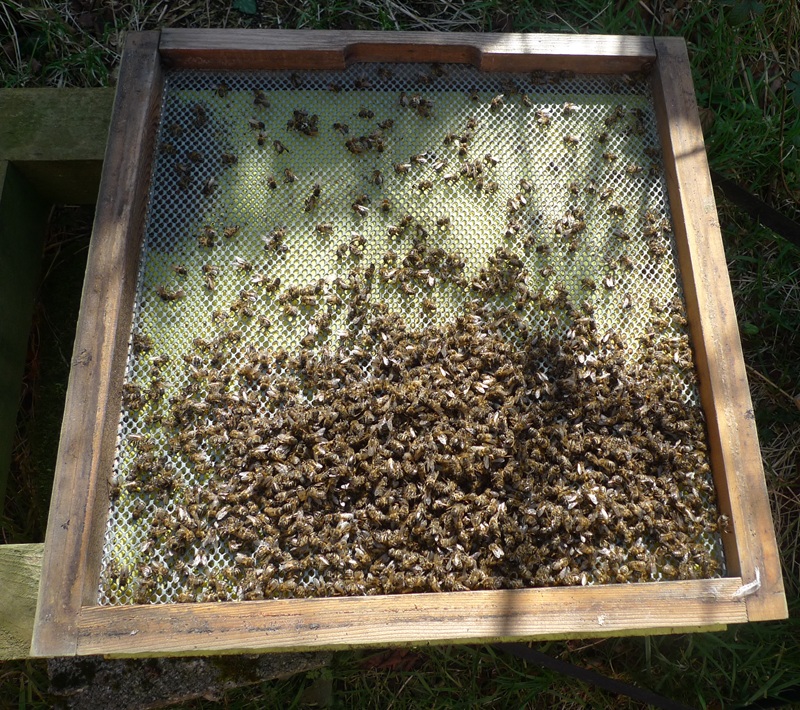
Dead bees on VMF
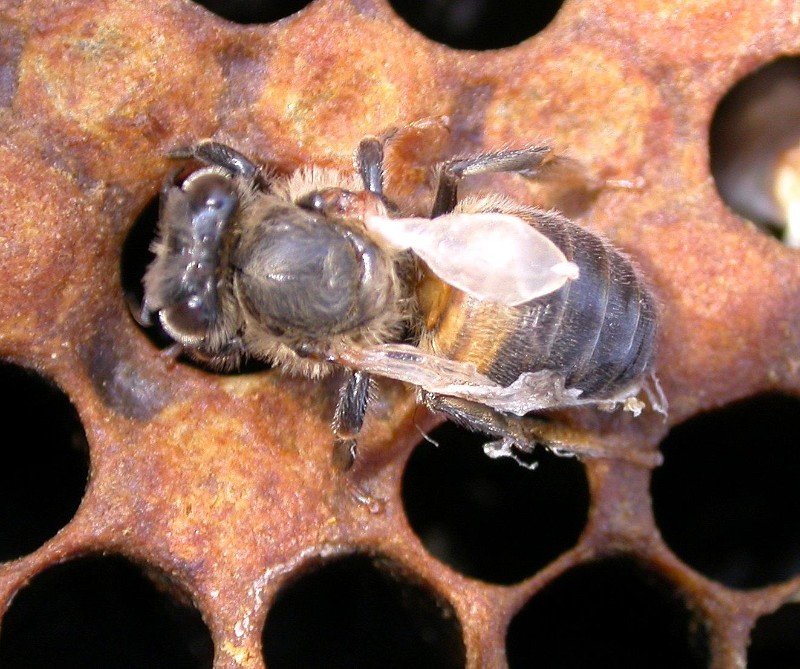
Deformed wing virus
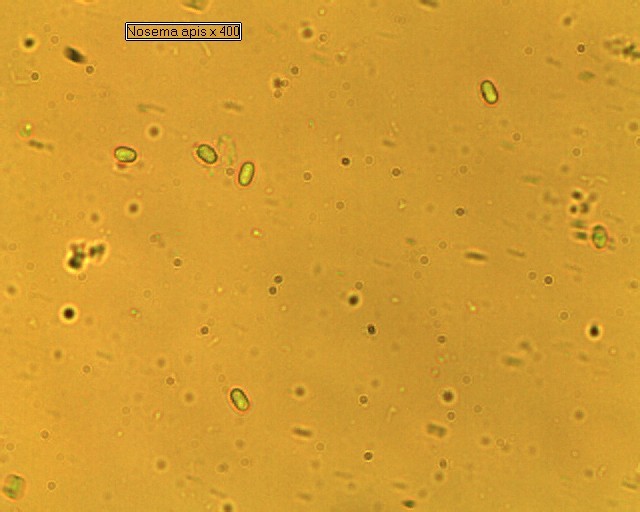
Nosema spores
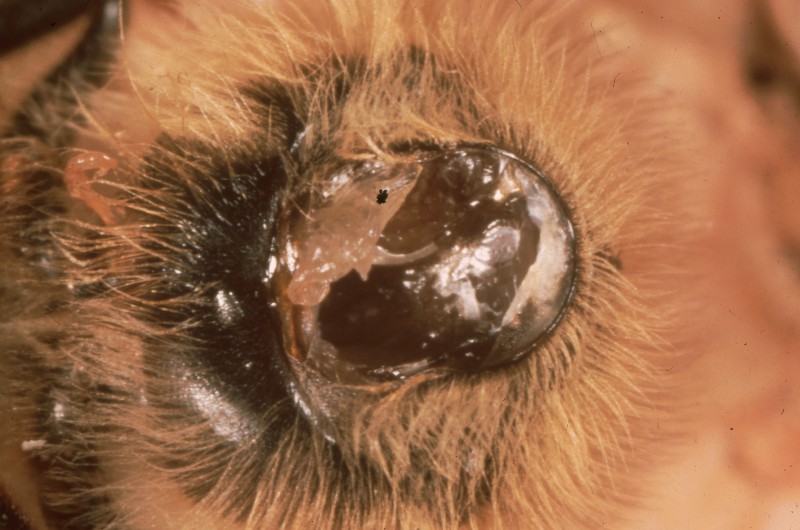
Tracheal mites
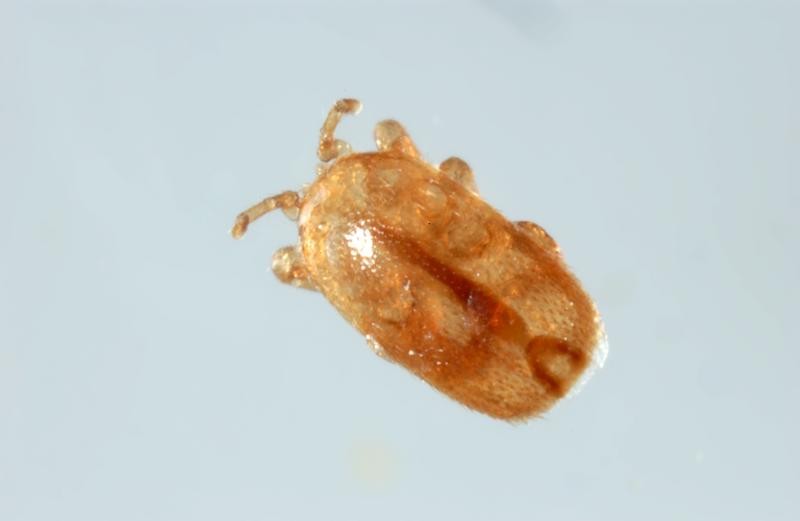
Tropilaelaps mite
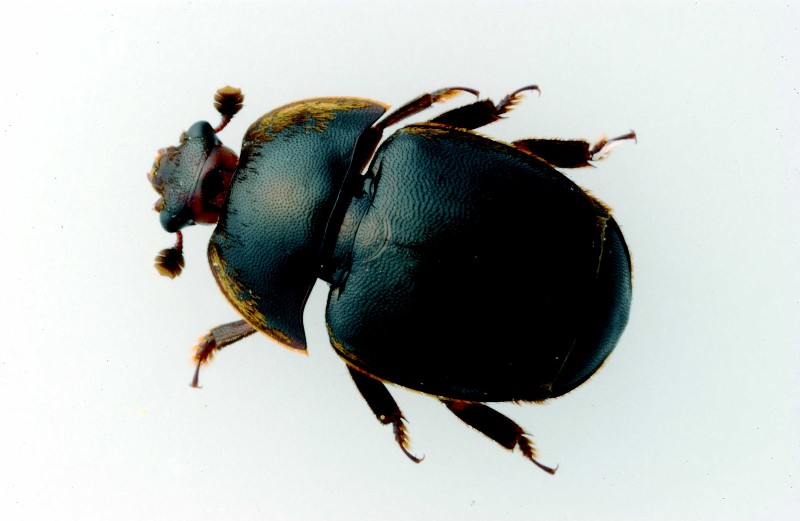
Small hive beetle
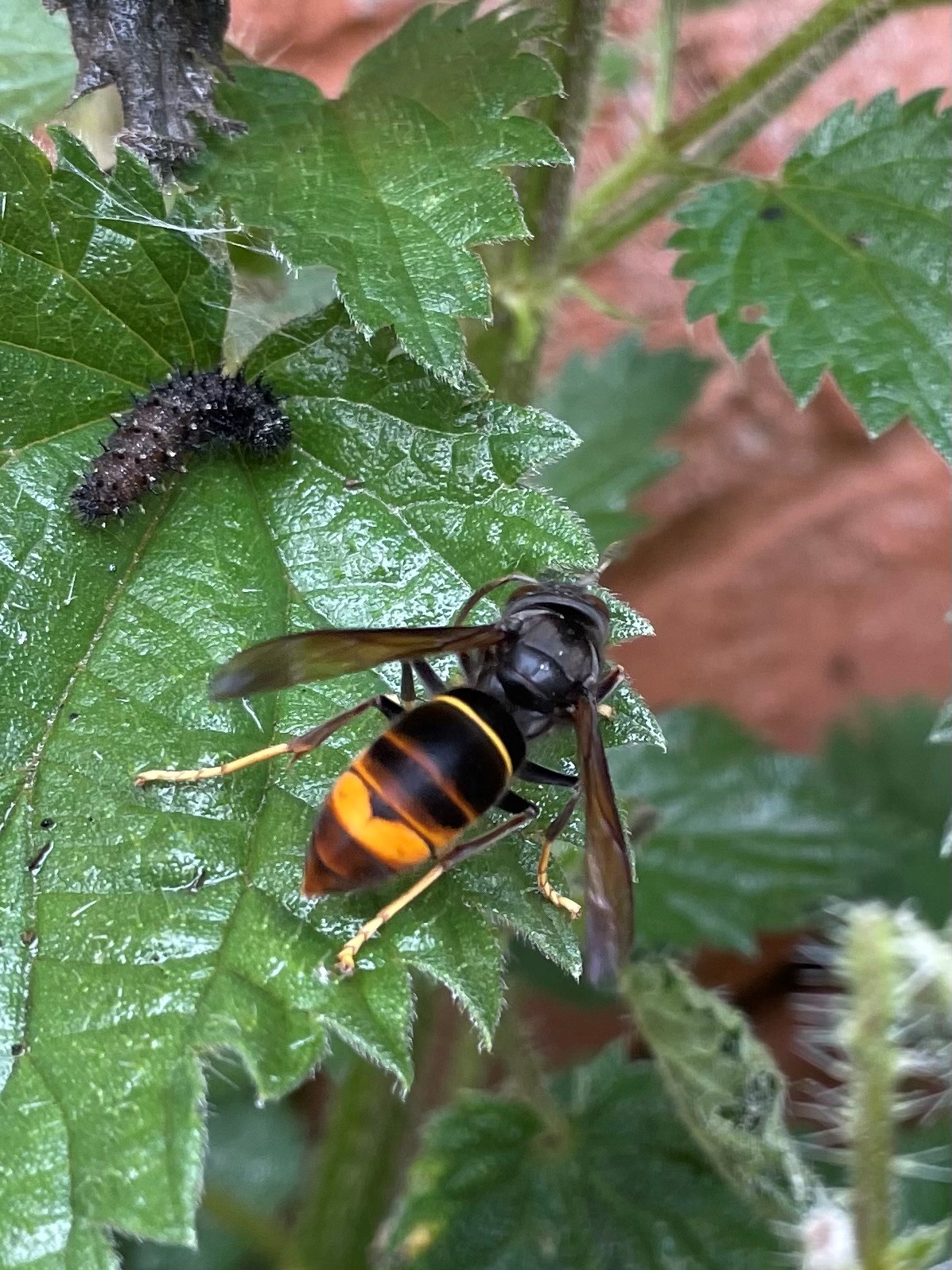
Yellow legged Asian hornet
The Real Culprit? Could it be the beekeeper? Was the colony big enough to survive the winter? Did they have enough stores? Were they queen right? Click HERE to view or download Dylan’s Hive Autopsy Flow Chart from BeeCraft magazine.
Trends in Colony Losses through Time
BBKA results of colony loss surveys show huge variations from year to year. 2012/13 was over 30%, but the next season was nearer 10%. 2025/26 season was the highest for 13 years (over 35%). Major variations over the whole country such as these can only be caused by climate and weather fluctuations. Records show our climate is changing, leading to bees and forage sources becoming out of sync. Periods of unseasonal wet or cold weather also impact adversely on colony survival.
Murder Most Foul! Looking at foul brood statistics over the past few years does not reveal any concrete evidence of a relationship to colony deaths. Indeed, Dylan showed a graph of EFB/AFB cases each month from 1999 to 2024, with only a tiny fraction of cases occurring between the period November to February.
Preventing Further Fatalities
At the top of Dylan’s list of preventative measures is Bee Health, with Varroa a major concern.
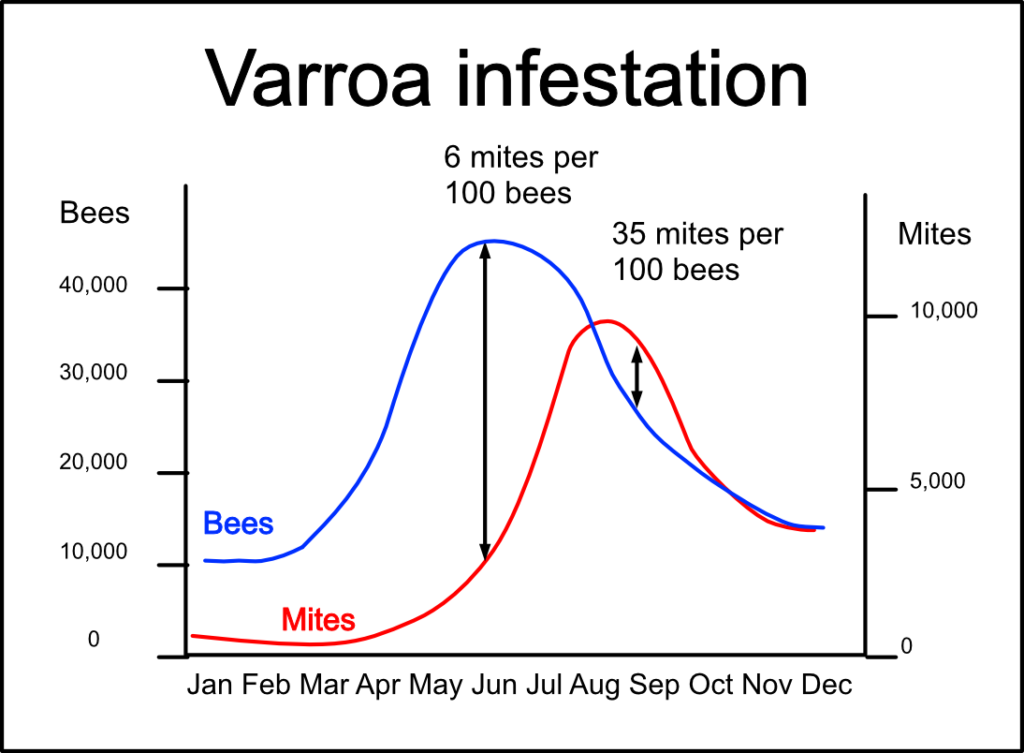
The critical time for the bees is August/September as the brood nest reduces and the mites infest a higher and higher proportion of the remaining brood cells, damaging the health of the developing winter bees. This shortens the lives of winter bees and is responsible for a higher viral infection rate, both of which impact on colony survival.
Tackling varroa should therefore be considered a priority, even though some colonies may appear to be capable of controlling mite numbers.
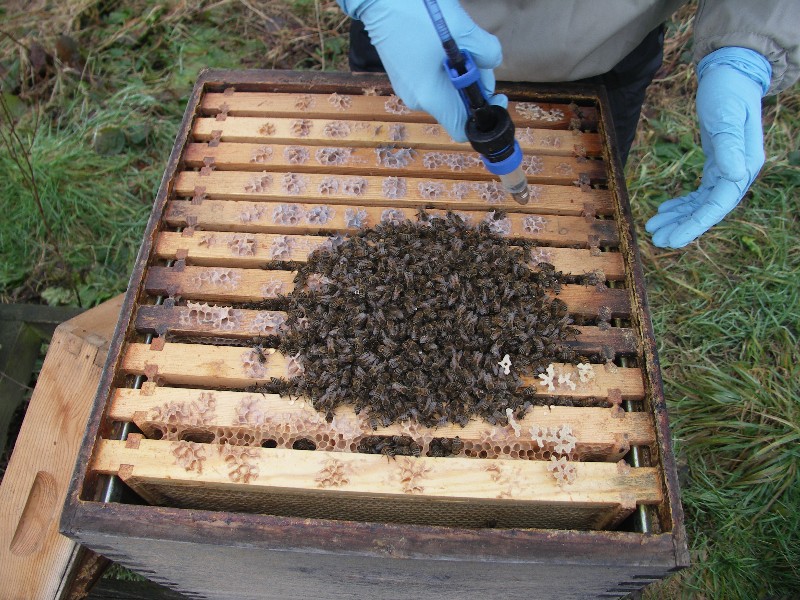
Varroa treatment
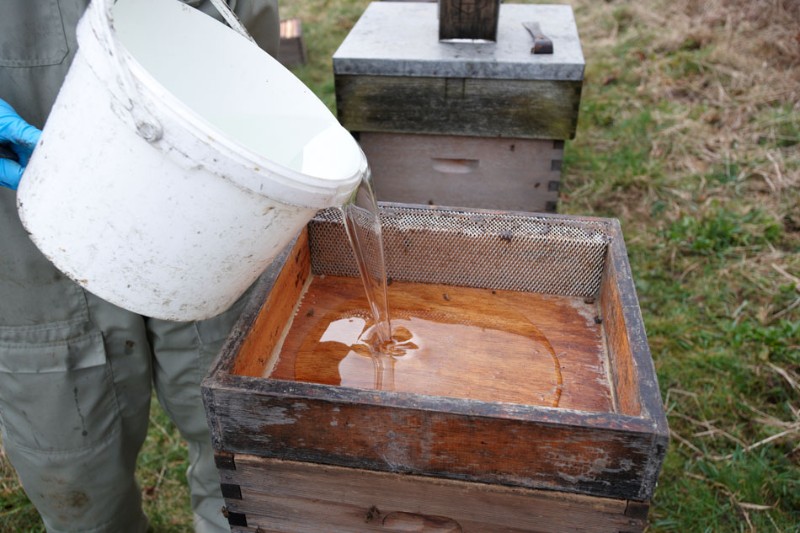
Winter feeding
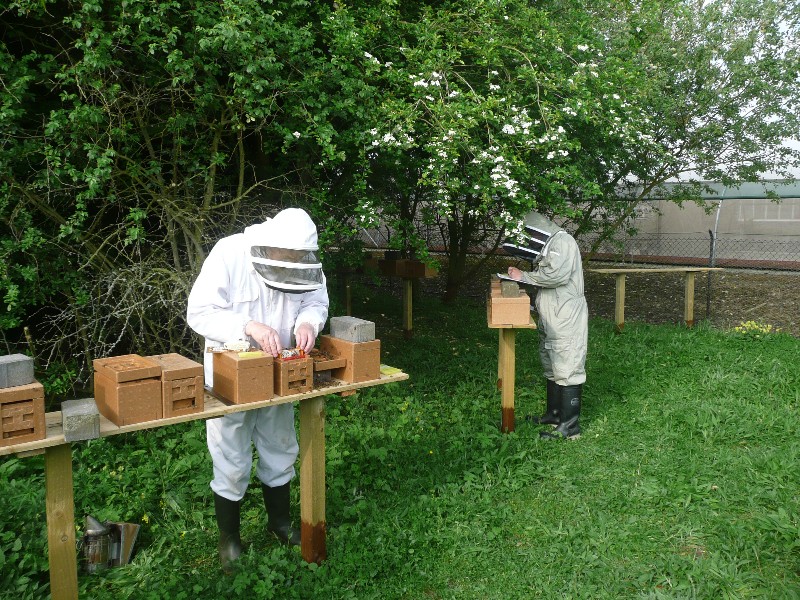
Raising nucs to replace winter losses
Nutrition and Stores
Many beekeepers feed pure sugar or invert syrup to colonies to boost stores before winter. Sadly, neither of these substances contain the micronutrients of natural bee stores. This can be partially overcome by feeding supplements containing pollen/pollen substitute.
Colony size going into winter
It has long been known that large colonies survive better than small colonies. One reason is that large colonies have better control over the temperature and humidity of the brood nest. Remember that the 35lb of stores consumed over winter contains 18% water and produces more water as a result of being converted into energy.
Insulation at the top of the hive will help prevent condensation dripping onto the cluster. Condensation on the sides of the hive can drain via the varroa mesh floor.
Finally, raising a few nucs and taking them through the winter will offset losses to some extent. If not needed, they can always be sold to other beekeepers.
Conclusions
As beekeepers, we need a comprehensive understanding of bee pests, pathogens and predators.
Losses can happen to anyone. Try to learn as much as you can from them.
Over wintering is about survival AND starting the year with strong colonies.
Integrate your overwintering survival techniques.
The talk was followed by a question and answer session. Our thanks to Dylan for coming all the way from Hampshire, giving us an inspiring talk and answering our questions.
Reference
Winter colony losses handout by Dylan Gussman